
Before you apply anywhere, I want you to have one number written down.
Your "walk-away number."
The lowest salary that keeps your life where it is today.
Most educators skip this step.
Then the first salary number in their search comes from the company. It shows up as a required box on the application, a recruiter asking for your range on the first call, or an offer that comes in under what you make now.
About 1 in 4 educators who've taken my career quiz picked money as the top reason they're thinking about leaving. If that's you, this number decides whether the move is worth making at all.
Three figures go into it. Grab your contract and your last pay stub.
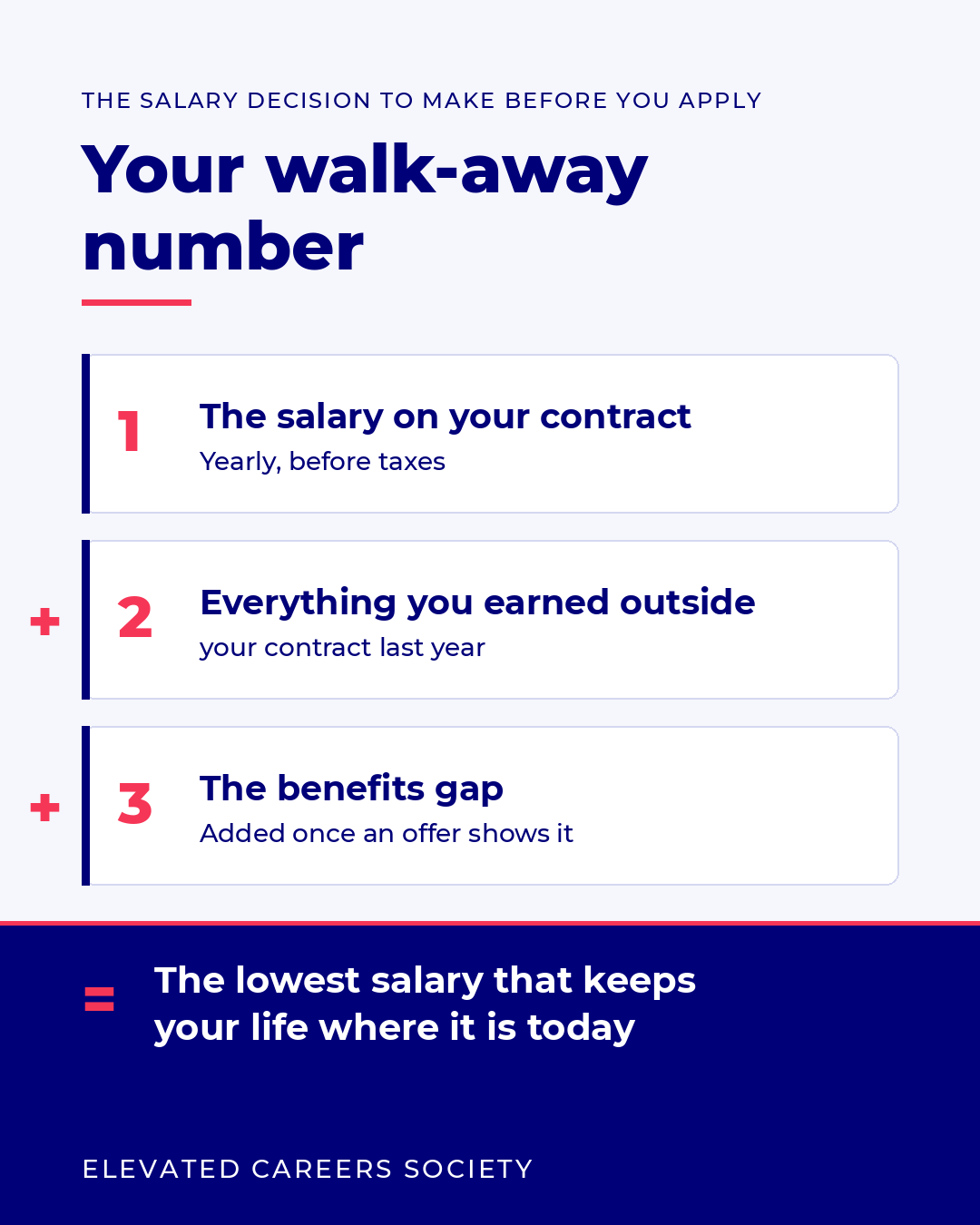
Figure 1: The salary on your contract
The yearly number, before taxes. That's how job postings list pay, so it's the figure every posting gets measured against.
Figure 2: Everything you earned outside your contract
Summer school. Tutoring. The coaching stipend. The second job in July.
Add up last year's total. A lot of that income goes away with the summers once you leave, and your new salary has to cover it. If it doesn't, you've taken a pay cut you never planned for.
Figure 3: The benefits gap
Find what comes out of each paycheck for your health plan and multiply it out to a year. That's what your insurance costs you today.
You won't know the new number until a company tells you. So write today's number down now. When an offer comes, ask for the employee premium at your coverage level. Anything above today's number gets added to your walk-away number before you say yes.
Two more pieces deserve a line on the page, even as rough guesses.
Retirement. If you pay into a state pension, that comes out of every check. Corporate retirement usually runs through a 401(k), sometimes with a company match. Ask what the match is.
Time off. Your summers go away. Ask how much paid time off the role comes with, so you know what you're trading.
Neither one has to be exact right this moment. They just shouldn't be a surprise on an offer call.
Add it up
Figure 1 plus figure 2 plus figure 3, the benefits gap once an offer shows it to you. That's your walk-away number.
Write it at the top of your job search notes. It's the number you'll search with.
Turn the number into a filter
This is the part that changes which jobs you even look at.
On LinkedIn, type the number right into the job search in plain words, like "remote customer success manager jobs that pay $70,000 or more."
Swap in your title and your number. LinkedIn's newer search reads the whole sentence. It still misses sometimes, so open each posting and check the range yourself.
On Indeed, go into your profile's job preferences and set your minimum pay. Indeed uses it to shape the jobs it shows you. Some postings only show a salary Indeed estimated. Go by the range the employer posted.
Then run one rule on every posting.
If the top of the posted range is under your walk-away number, skip it.
If your number sits inside the range, apply... and you already know where you'll aim when they ask for your range.
Why I want you to have it first
When I left Wake County for Measurement Incorporated in 2015, my salary went up $27,000.
I'm telling you that because it happens. A corporate offer can clear a teaching salary by a lot. It can also come in under it. Without a number written down, a pay cut can feel like a win just because the job isn't in a school.
So find the contract. Find the pay stub. Write down figure 1 before Monday.
Knowing which roles clear your number starts with knowing which roles fit you. My quiz reads your school experience and points you at the path that fits. Take the quiz here.
Companies hiring for roles like these run every Saturday in Jobs Jobs Jobs, my LinkedIn newsletter listing companies currently hiring former educators.
Tell me which of the three figures was hardest to pin down. Reading this in your inbox? Hit reply, I read my own email. Reading on my website? Send me a message on LinkedIn.
Steph

Find me on LinkedIn | Career Change Accelerator | Get on my 1:1 Waitlist

About Steph Yesil: Steph is a former K–12 educator who moved into corporate education companies in 2015 and built a career across curriculum, professional learning, content, and leadership. She founded Elevated Careers to help educators build successful corporate careers.